We are all proud to be known as an Australian, but where did our country’s name “Australia” come from? Who gave our country its name? If you ask around, most of us don’t know.
The answer is, of course, Matthew Flinders, the great British adventurer, navigator, scientist and cartographer who completed a circumnavigation of the Australian continent in 1802 and 1803 in his sailing ship the Investigator and charted the whole coastline.
It is also not a well-known fact that accompanying Flinders on his circumnavigation as an interpreter and negotiator was Bungaree, a native Australian Guringai Man from the Broken Bay area. Bungaree was therefore the first aboriginal to sail around the continent.
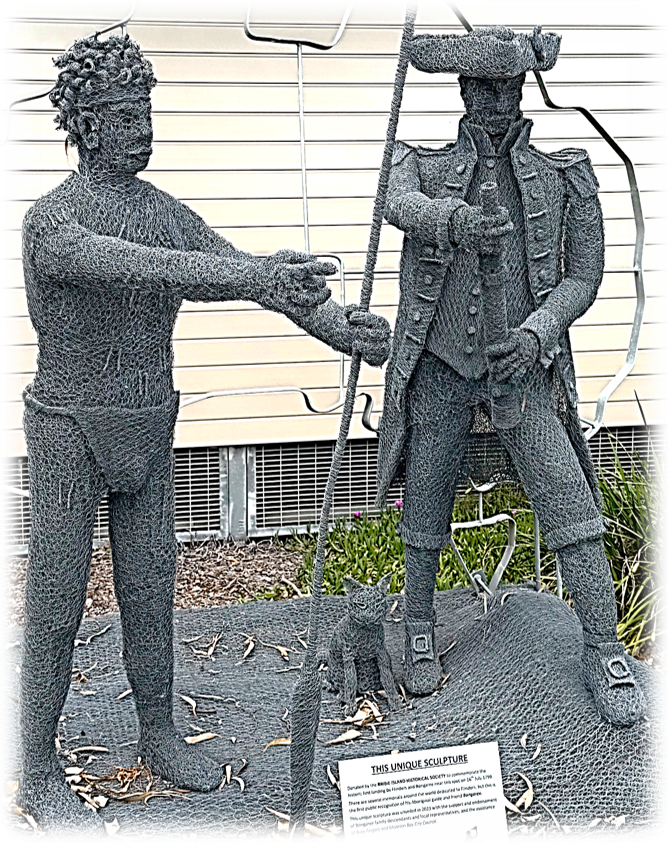
The only statue commemorating their cooperation and friendship is located at Bongaree, Bribie Island, Queensland, as a recent project of the Bribie Island Historical Society.
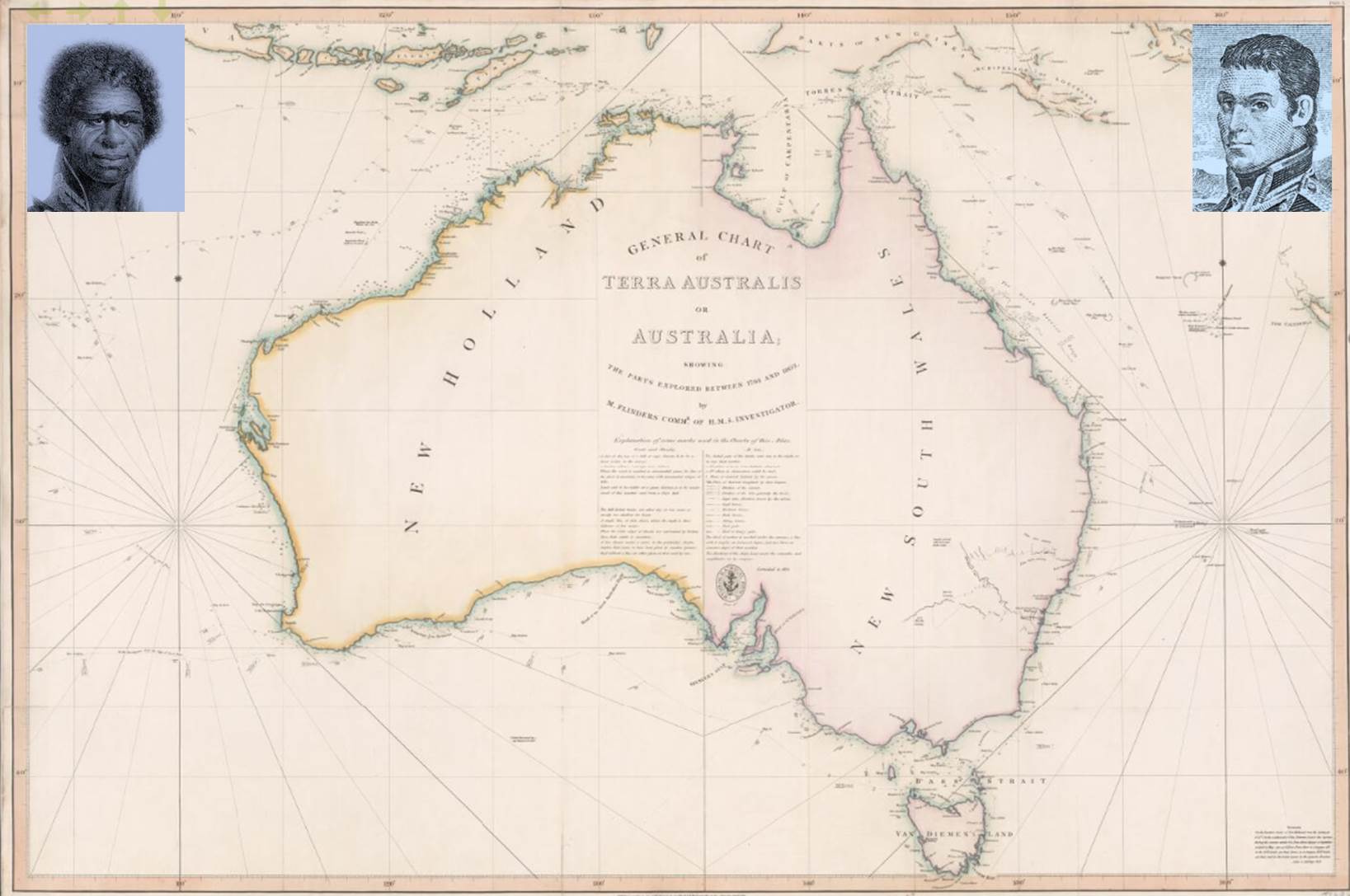
On January 1st 1814, Flinders published his “General Chart of Terra Australis or Australia”, and so the name “Australia” appeared in a chart of the continent for the first time.